Wednesday, 17 May 2023

UN marks International Day Against Homophobia, Biphobia and Transphobia

 Together Always: United in Diversity


International Day Against Homophobia, Biphobia, Lesbophobia and Transphobia is observed on May 17 and aims to coordinate international events that raise awareness of LGBT rights violations and stimulate interest in LGBT rights work worldwide. By 2016 the commemorations had taken place in over 130 countries.

Mentioning this year’s theme in a statement to mark the day, Together Always: United in Diversity, the UN chief called on leaders ‘to speak with one voice” to eliminate stigma and discrimination, that result in sometimes deadly attacks targeting LGBTQI+ communities.

The Secretary-General showed his deep concern over the levels of violence directed towards LGBTQI+ people and how those communities are still vulnerable to multiple forms of attack.

“As we mark the International Day Against Homophobia, Biphobia and Transphobia, we face a stark fact. In every corner of the world, LGBTQI+ people continue to face violence, persecution, hate speech, injustice, and even outright murder,” said the UN chief.


''Pride - Embrancing diversity-LGBTQ in Angola''


Ladies and gentlemen, welcome to the latest webisode of our show!

This analysis focused on whether people around Angola think that homosexuality should be accepted by society or not. The full question wording was, “Angola has decriminalized homosexuality. What's your opinion? 

Today we have a very special guest, she/he belongs to the LGBTQ community in Angola.


My name is Euclides Manuel, I belong to the LGBTQ community.

Can you tell us what your daily life has been like? How do people view you in society?

Thank God my days has been more or less, some people accept me and others don't. But I try to appease so there are no quarrels.

In this way, I ask that people respect me, that people have more love and more empathy for the LGBTQ community.
We are also human and we are people just like you and our right is also the same as yours.
So have more love and more passion for us.

It's all we want.

Thanks!


We interviewed several people of different genders and ages, and carefully analyzed each one's point of view. Very few people say that society should accept homosexuality; specifically 98% of them categorically do not accept homosexuality, other 2% who support the inclusion of the LGBTQ community in society are people who apparently are not rigorous practitioners of religion.

For example, this woman who preferred to speak anonymously was very satisfied with the decision of the Angolan government, for having decriminalized homosexuality in our society.

Hi!

What did Angola do?

Angola has decriminalized homosexuality. What is your point of view?

Well, for me this is even better, it's good.

So, do you agree with the government's decision?

Yeah, if they decided like that, who are we to say no?


This research was enough to realize that there are no significant differences between the opinion of men and women in the capital of Angola. However, of the 6 people interviewed (except the LGBTQ representative), there was a significant difference, women were more likely to approve of homosexuality than men. 

We spoke with 6 ordinary citizens 3 female and 3 male, the study shows the largest divide, with 90% of 2 females saying homosexuality should be accepted by society against 10% of a female who does not accept homosexuality. In the case of boys, 100% of them categorically do not accept homosexuality and they are based on very strict biblical principles.


Religion, both as it relates to the relative importance in people’s lives and actual religious affiliation, also plays a large role in perceptions of the acceptability of homosexuality in many societies across the globe.

In our case study, those who say religion is “somewhat,” “not too” or “not at all” important in their lives are more likely to say that homosexuality should be accepted than those who say religion is “very” important.


Despite major changes in laws and norms surrounding the issue of same-sex marriage and the rights of LGBT people around the world, public opinion on the acceptance of homosexuality in society remains sharply divided by country, region and economic development.

Angola has decriminalized homosexuality. What's your opinion?


Good evening ladies and gentlemen,

You're welcome to the second day of our program!

Today we have a lady who categorically does not agree with the inclusion of LGBT people in Angola.

Interviews. What is the public's opinion? Agree or disagree?

Today we have two guests of completely different age, sex and opinion.


What is the opinion of this 67 year old man?

Good afternoon!
Good afternoon.
Please, can you tell us your age?
I am 67 years old.
Angola has decriminalized homosexuality. Do you agree or disagree?
I do not agree.
Why?
Because it's always nice to have a girlfriend.
Why exactly?
Because man with man doesn't work. It has to be just a woman with a man.


This 15-year-old girl thinks completely different

Good afternoon girl!
Good afternoon.
What is your name?
My name is Edvania.
How old are you?
I'm 15 years old.
What do you think of homosexuality in Angola?
Honestly speaking I think this is normal. A man liking another man like him... I can't explain.
But for me it's something basic that can happen from one day to the next (overnight).
So, do you agree with the new government law?
Yes I agree.


Our campaign came to an end, collecting very important interviews. The end of the program is not the end of the movement, thanks to all who believes and supports our initiative.

Please click the links below to watch all the webisodes.


We stand for inclusivity. We believe that everyone has the right to a safe and welcoming environment in our society.

Harassment includes but is not limited to offensive verbal or written comments related to gender, age, sexual orientation, disability, physical appearance, body size, race, religion, social class, economic status, veteran status, sexual images, deliberate intimidation, stalking, following, harassing photography or recording, sustained disruption of talks or other events, inappropriate physical contact, and unwelcome sexual attention.


Summary: Be respectful. Harassment and abuse are never tolerated.


The SDGs have a guiding principle that “no one will be left behind” and a commitment to prioritizing the poorest and most marginalized. The African Union’s Agenda 2063 has similar commitments to including and prioritizing the poorest and most marginalized in development efforts. There is wide-spread evidence that sexual and gender minorities are often among the most socially, politically and economically marginalized populations and thus require specific consideration and targeted inclusion to realize the vision of the SDGs. 


We have zero-tolerance for discrimination and does not discriminate on the basis of  race, colour, national origin, ethnic or social background, genetic information, gender, gender identity and/or expression, sexual orientation, religion or belief, HIV status or disability.


Wednesday, 15 March 2023

Leveraging Innovations in Indigenous Communities of Angola


Indigenous peoples in Angola

The San, the Himba and their related groups constitute the indigenous peoples of Angola. Although the government of Angola has adopted the UN Declaration on the Rights of Indigenous Peoples, the San, the Himba and other Indigenous Peoples continue to face challenges in terms of lack of social and economic inclusion, and a number of core human rights remain unrealised to them.


The Government of Angola does not recognise the concept of Indigenous Peoples as affirmed in international law, and there are no specific references to Indigenous Peoples or minorities in the Constitution, nor in other domestic law. Thus, a number of core human rights remain unrealised to the country’s Indigenous Peoples.

The San, the Himba and related indigenous groups

The Indigenous Peoples of Angola include the San and the Himba and potentially other Khoe-san descendent groups, such as the Kwisi, the Kwepe, and those with similarities to the Himba, such as the Kuvale and the Zemba. Together they number around 25,000 peoples, or 0.1 per cent of Angola’s estimated population of 25 million peoples.

The San, the Himba and related Indigenous groups are situated mainly in Angola’s southern provinces of Huila, Cunene, Kuando Kubango and Moxico. While most data on the language of the Khoe-san or Khoe-san descendent groups is outdated, it is known that the language of the Himba, the Kuvale and the Zemba is Herero.


Main challenges for the Indigenous Peoples of Angola


One challenge for Angola’s Indigenous Peoples is Angola’s economic downturn. 2016 saw a reduction in funding of smaller NGOs working with Indigenous Peoples, and some closed as a result. Another challenge relates to land expropriations. During 2016, several land expropriations for tourism development, commercial logging, and national projects affected Indigenous Peoples’ settlements.

A group of 18 NGOs forming a human rights monitoring platform in Angola sent a petition to the President, National Assembly and Attorney General denouncing the expropriations.

Another major challenge for the Indigenous Peoples of Angola is the drought during 2016, which has seriously affected all rural communities in southern Angola.

Information on the challenges facing the Himba, the Kuvale and the Zemba is scarce, but include land tenure and access to services and natural resources, as also seen in Namibia with these cross-border groups. In previous years, the Himba and the Zemba communities’ have protested over loss of territory, issues of ancestral graves, loss of livelihoods, and compensation.

Also, local organisations in Angola continue to highlight the lack of social and economic inclusion of the San, the expropriation of their land, and their discriminatory labour and social relationships with neighbouring groups. In general, the San peoples appear to have subordinate socio-economic standing in relation to neighbouring non-San groups.


Progress in support to the San peoples

In 2016, the Ministry of Assistance and Social Reintegration carried out various projects with San communities, mostly focused on agricultural training, but also on aspects of education, housing and policy development.

A number of civil society organisations continue to provide support to Angola’s Indigenous Peoples. In 2016, various programmes targeting San groups, such as civil registration, agricultural training and promotion of cultural, social and economic rights, were implemented alongside workshops and meetings with local authorities and civil society networks.

Case: Public recognition of the San

The San have some public recognition on a national level. In 2016, the national broadcaster TPA showed at least 13 short news segments related to government projects with San communities. Also, a TPA broadcast journalist wrote a short book on the San in Angola in 2015. However, it is not available outside the country, nor in English translation.


Peoples


Main languages: umBundu, kiMbundu, kiKongo, uChokwe, Portuguese (official)

Main religions: indigenous beliefs, Christianity

Ethnic groups include Ovimbundu 4.5 million (37%), Mbundu (25%), Bakongo 1.7 million (14%), Lunda-Chokwe (8%), Nyaneka-Nkumbi (3%), Ambo (2%), Mestiço (2%), Herero (up to 0.5%), San 3,600 and Kwisi (up to 0.5%). (data: Ovimbundu, Mbundu, Bakongo, Mestiço - CIA World Factbook 2006 edition; Lunda-Chokwe, Nyaneka-Nkumbi, Ambo, Herero (1998) - countrystudies.us/Angola)

The majority of today's Angolans are Bantu peoples, including the Ovimbundu, Mbundu, and Bakongo, while the San are descendants of the indigenous Khoisan people.

Traditionally a largely rural people of the central highlands, Ovimbundu migrated to the cities in large numbers in search of employment in the twentieth century.

The Mbundu are concentrated around Angola's capital, Luanda, and the north-central provinces. While some Mbundu still speak kiMbundu, many among this minority speak Portuguese as a first language.

Spanning both sides of the Congo river, Bakongo people predominate in Angola's impoverished but oil-rich north-west, including the Atlantic enclave of Cabinda. Bakongo are known as shrewd and energetic people, whether as organizers of businesses, syncretic churches, or political movements.

In south-western provinces are semi-nomadic cattle-keeping peoples, most of whom are Ambo, Nyaneka-Nkumbi (also known as Nyaneka- Humbe) or Herero.

Scattered bands of San and Kwisi peoples, who live chiefly by hunting, gathering and petty trade, continue their nomadic existence in the southernmost provinces.


Shadows and facts


Not infrequently, these men and women "from the Bush" were framed as barbarians and savages, cruel and ferocious, and were ignorant of all the rules and duties on which regularly organized societies were founded, ignoring all rights...


In this so-called inferior state of civilization - without schools, without academies, without literary or scientific societies, without hospiats, without asylums, without philosophical systems, without religion or simply believing in God, knowing of some things only what they cannot ignore, and given to the greatest freedom - those peoples live happily and contented, without the refinements of civilization, it is true, but also without the hideous vices and deep demoralization that are the sad appanage of the so-called more advanced societies."


 This documentary enables us to have a better understanding of the Angolan situation of indigenous peoples, the common issues that we face and common actions we must undertake. It will help  us to underpin our positions in the defense of the rights of indigenous peoples. 

It also advocates the necessity for geared toward the promotion of cultural expressions emerging from indigenous communities.


Through community mobilization, indigenous groups tackle issues relevant to their respective regions, in particular those relating to their livelihood, social economic wellbeing and ecological health.

Participation is key for the successful implementation of poverty reduction strategies, pastoralist groups are in most cases excluded in development and policy discourse.


Recomendations:

- Creation of policies promoting the cultural expressions and cultural participation of indigenous peoples.


- Encrease in funding of smaller organizations and NGOs working with Indigenous Peoples


- Provide access to services and natural resources


- Promote social and economic inclusion of the indigenous people  - Stop the action of expropriation of their land

Friday, 24 February 2023

STREET CHILDREN TAKE PART IN LUANDA CARNIVAL 2023 - FOLLOWED AFTER THE GLOBAL TOURISM RESILIENCE DAY (FEBRUARY 17)

 LUANDA CARNIVAL EDITION 2023

FOLLOWED AFTER THE GLOBAL TOURISM RESILIENCE DAY (FEBRUARY 17)


Luanda Carnival started the day after the global tourism resilience day.
February 17 will be celebrated as Global Tourism Resilience Day every year, starting this month. The United Nations General Assembly has adopted a resolution from Jamaica to declare the first-ever Global Tourism Resilience Day in an effort to future-proof the sustainability of tourism.

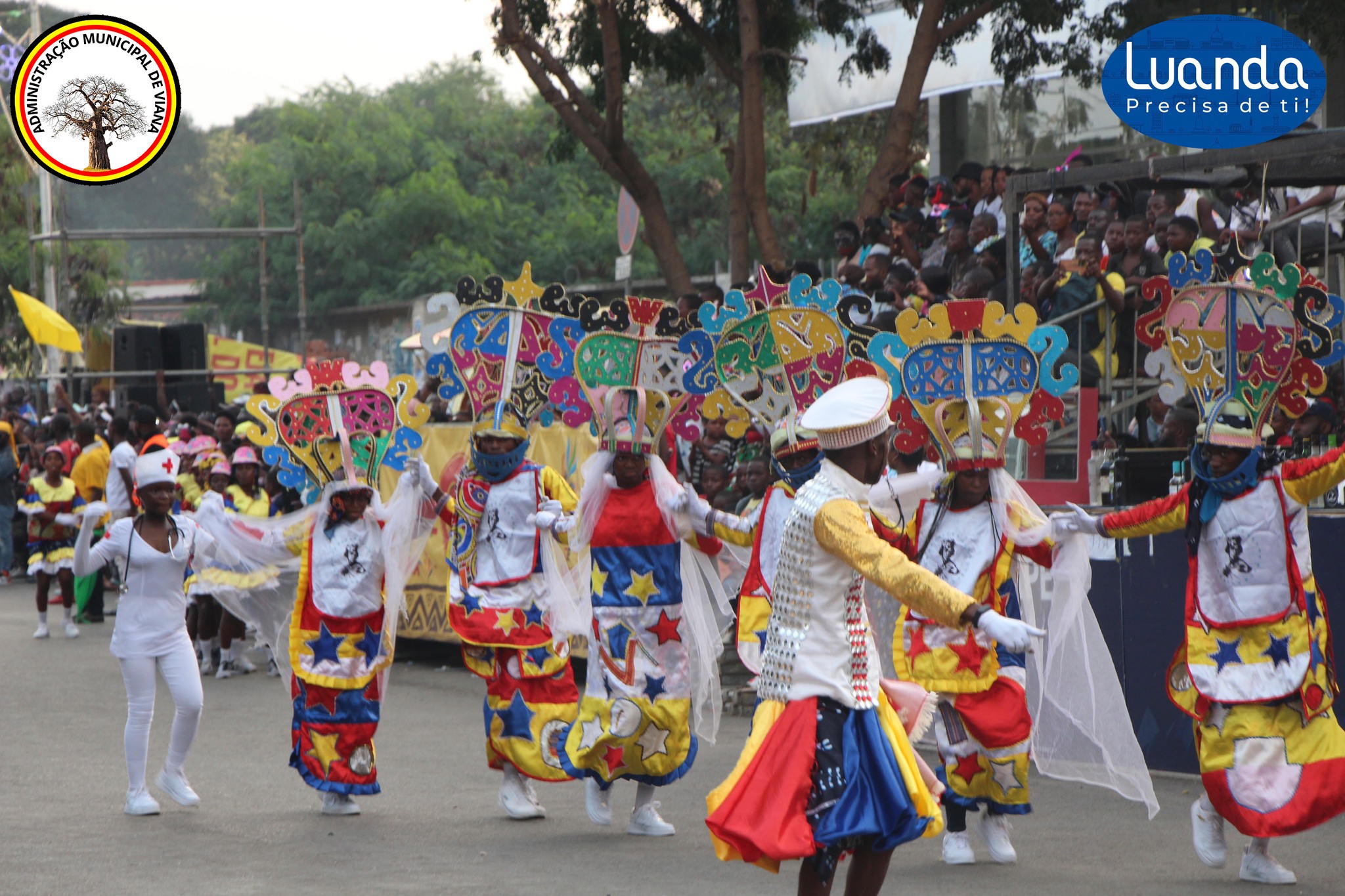
The 2023 edition of Carnival in Luanda, which once again shook Nova Marginal, ended on Monday night, a 2 years after the lifting of restrictions imposed to face the Covid-19 pandemic.  

One of the main objectives is for Carnival to become more attractive from a tourist and economic point of view.

For many developing countries, including the least developed countries, small island developing states, countries in Africa and middle-income countries, tourism is a major source of income, foreign currency earnings, tax revenue and employment. Because tourism connects people with nature, sustainable tourism has the unique ability to spur environmental responsibility and conservation.

Sustainable tourism, including ecotourism, is a cross-cutting activity that can contribute to the three dimensions of sustainable development and the achievement of the Sustainable Development Goals by fostering economic growth, alleviating poverty, creating full and productive employment and decent work for all.


STREET CHILDREN TOOK PART IN LUANDA CARNIVAL 2023


Hello, happy carnival!

We're both dancers and we're getting ready for the show later this afternoon at 19:00.

Cheer for us, we need your support for us to win. Help us.

Are you ready to dance in the street carnival?

Yes, we are ready.

Could you go ahead with a touch of dance now?

Of course, no problem.

What's in that bag?

There are our work material. We've been rehearsing here every day.

OK. Bye bye!


Children from all groups who took to the streets for yet another Entrudo competition demonstrated the continuity of the cultural matrix of Carnival in Luanda. Carnival groups in Luanda are formed by several families, this characteristic facilitates the transmission of habits, techniques and arts of singing, playing instruments, dancing and playing.

"The passing of testimony occurs naturally, that is, parents teach their children, uncles do the same with their nephews, grandparents with their grandchildren, and great-grandparents with their great-grandchildren, and in this way the continuity of cultural identity has been ensured Carnival".

The preservation of Luanda's cultural traits, which the children's groups showed, were visible in the songs, dances, costumes and floats.

Our carnival is a true festival of demonstrations, in which each culture develops practices that relate to their way of life and the obstacles we face in everyday life. These cultural manifestations characterize, identify and represent the culture of a people or nation, each with its particularities and principles for full freedom of opinion and thought.


DIVERSITY OF STYLES MARKS THE RETURN OF THE “FESTIVAL OF THE PEOPLE”

It's Carnival, it's revelry and joy. The largest cultural event in the country has returned to the streets, after two years of suspension due to the Covid-19 pandemic.

The President of the Republic, João Manuel Gonçalves Lourenço, and the First Lady of the Republic, Ana Dias Lourenço, attend, this Monday, February 20, at Nova Marginal, the central parade of the Luanda Carnival Edition 2023, accompanied by the Governor Provincial of Luanda, Manuel Gomes da Conceição Homem.

Our carnival is a true celebration of manifestations, where each culture develops practices that relate to their way of life and obstacles we face in everyday life. These cultural manifestations characterize, identify and represent the culture of a people or nation, each with its particularities and principles for full freedom of opinion and thought.