Monday, 3 October 2022

The consequences of dropping out of school due to child marriage and teenage pregnancy - AFRICA

Outstanding  stories of women and girls who dropped out of school due to child marriage and teen pregnancy


Both early teen marriage and dropping out of school have historically been associated with a variety of negative outcomes, including higher poverty rates throughout life.

Our girls back to school campaign is ongoing


Luisa's story

Our today's guest  is Luisa, she will share with us her academic history and consequences of her choices.

I regret breaking my studies because of a young marriage

Hello! My name is Luisa, I will talk a little about my academic life and how I stopped studying.

I stopped studying when I was twenty years old because I found a husband. This marriage made me forget school, I gave birth to four children. But I regret that I stopped studying. Now I have no way to go back to study because life no longer allows me to study. I don't have a job, my husband is also unemployed, and we're all stuck.

If someone offers me a help, I would like to go back to study because I have this desire so that my daughters can also study, in order to improve our life a little bit.

What grade did you stop studying in? How old are you now?

I stopped studying in the 8th grade. Now I am 34 years old.

Have your daughters ever gone to school?

Yeah, they did. My first daughter is 14 years old, finished the 8 grade and has been two years without studying.

The second daughter is 13 years old, she concluded the 4th grade and is also two years without studying.

Have you done anything to continue your daughters' academic development at home?

What I've been doing isn't enough to pay their tuition. I am a street vendor and the little bit I earn is used to buy food that has also not been enough. Sometimes we sleep without eating dinner, there is no food to eat.

Another thing, our life is very difficult, we live in a poor slate house with a miserable yard, there is no light or running water. We carry the bathtub for 200 kwanzas that is very expensive for us.

I take this moment to ask for support from good faith people to help my family.

Madam, you said that there is no water in your house. Isn't it difficult to comply with the prevention measures against covid-19?

It is very difficult indeed. In the neighborhood where we live people do not respect the rules, we can find many people crowded in public places, things are very expensive. In general we live a very critical life.

Learn more here: https://she-leads.blogspot.com/2020/12/africa-educates-her-campaign-angola_97.html

Osana's story

Today we invited Osana, she will share with us a little of her academic life.

It has been difficult to pay for my studies and at the same time support my baby

Hello, good afternoon! My name is Osana Manuel, I'm 22 years old and I'm going to share my academic life with you.

Unfortunately, I became pregnant at the age of 18. I gave birth to my son, finished high school and even managed to enter the first year of university. But I was forced to lock the school year because of financial problems.

How long have you been without studying?

I stopped studying in 2019. I locked the year because it has been difficult to pay for my studies and at the same time support my baby.

Osana, aren't you married? I'm not married. Unfortunately my relationship with my son's father did not work so I am a single mother.

Would you like to go back to school if an opportunity came up?

I would really like to go back to school because study is one of my biggest focuses. I attend many short courses  but I really want to finish university.

How did covid-19 impact your life?

The covid-19 disease was practically a disgrace, I was working and suddenly I stopped because of the covid-19 pandemic. I am now unemployed. Till today I'm sitting at home.

Thank you!

Click this link to learn more about Osana https://she-leads.blogspot.com/2021/03/i-miss-africa-educates-her-campaign.html


Maria's story

Pregnancy related school dropouts have become a matter of public concern in the world today. Schoolgirls who become pregnant have fewer opportunities to complete their education after childbirth and have fewer opportunities for socioeconomic advancement.

Our today's guest is Maria, she will share with us her academic journey.

I dropped out of school due to teenage pregnancy.

Hello, My name is Maria Gomes, I'm 21 years old, I'm here to talk about my academic life.

Maria are you studying right now?

No.

When did you stop studying and how old were you at the time?

I stopped studying in the 7th grade in 2017, at the age of 18.

Why did you stop studying?

I stopped studying because I got pregnant. When I discovered the pregnancy I did not stop studying at that moment, I continued with my studies until November 2017, then I dropped out of school because of the pregnancy symptoms.

Are you married to the father of your child?

No. We broke up because he denied the pregnancy

Would you like to go back to school?

Yeah, I'd like to go back to school.

What are the reasons that prevent you from going back to study?

Lack of financial resources. I have no money to pay my tuition.

How has the coronavirus affected you?

I used to work, but after the emergence of the pandemic my boss asked me to stay home. Also things in this period are very expensive and have made life very difficult, we had no way to eat at home, I am not working.

How have you been supporting your son?

My 35-year-old older sister has been helping me with the expenses. In general, I support my son alone without his father's help.

How old is your son?

My son is now 3 years old.


Girls and young women’s access, retention and completion in schools is still of huge concern in Africa. Our continent also has the highest rate of out of school children and adolescents globally. However, girls remain more likely to be permanently excluded from education and at a higher risk of being left behind.

Click this link to learn more about Maria: https://sofoniedala.blogspot.com/2020/12/africa-educates-her-campaign-angola_24.html


Studies indicate that a woman who marries young is 31 percentage points more likely to live in poverty when she is older. Similarly, a woman who drops out of school is 11 percentage points more likely to be poor.

Women who marry early can have a high likelihood of ending up poor later in life, yet can still be optimizing. However, even if the individual is optimizing, society might still be concerned about the effects of poverty on her children and the costs associated with transfer programs.


Violence against children takes many forms, including physical, sexual, and emotional abuse, and may involve neglect or deprivation. Violence occurs in many settings, including the home, school, community and over the Internet.

Sometimes raising awareness about sexual violence happens through very practical means.

IBM RPA Chatbot-BabyScream

We designed an Anti-harassment chatbot named BabyScream to help victims of child marriage, domestic violence and sexual abuse, denounce harmful practices.

Hands-on lab 

IBM  RPA Web Automation and Anti-Harassment Chatbot to Prevent Child Marriage and Abuse

We used RPA Automation Studio to create and deploy an Anti-Harassment Chatbot to Prevent Child Marriage and Abuse and automate our Web.


Anti-harassment Chatbot-BabyScream — To End Child Marriage

Education is an essential factor in combating the worst forms of child labour, including child marriage, domestic violence, teen pregnancy, human trafficking, poverty, social exclusion and gender bias.

The main goals of the project are to strengthen prevention mechanisms against child marriage and teen pregnancy, improve the mental health and education process and support survivors safely.

Sometimes raising awareness about sexual violence happens through very practical means. In many rural communities We visit, both girls and boys learn how to sew reusable menstrual pads, which not only enables more girls to attend school, but also creates opportunities for boys to discuss their responsibility to reduce sexual and physical violence.

Click here to see:  https://sofoniedala.blogspot.com/2022/04/wow-we-are-delighted-to-announce-second.html


Sofonie Dala - Young Talents from Africa : WOW! We are delighted to announce the second part of #SHECODESAFRICA - ''BabyScream'' IBM RPA Anti-harassment chatbot to End Child Marriage. The tech show with Sofonie Dala


Sunday, 2 October 2022

Say No to Violence - The International Day of Non-Violence is observed on 2 October. Most popular types of violence in Angola

 Say No to Violence

The International Day of Non-Violence is observed on 2 October, the birthday of Mahatma Gandhi, leader of the Indian independence movement and pioneer of the philosophy and strategy of non-violence.


Most popular types of violence in Angola

"Non-violence is the greatest force at the disposal of mankind. It is mightier than the mightiest weapon of destruction devised by the ingenuity of man". Here we are showing the most popular types of violence in Angola.


#AngolaElections2022: gunshots fired and protesters angry on Luanda streets following claims of “fraudulent” presidential elections


MPLA won the August 24 general elections with 51.7 percent of the votes - UNITA with 44.5 and 90 elected deputies

The National Electoral Commission (CNE) released the "definitive" provisional electoral results of the August 24 general elections announcing a victory by an absolute majority for the MPLA, which reaches 51.7 percent and elects 124 deputies. UNITA is second with 44.5 percent and 90 elected deputies.

CASA-CE, until now the 3rd largest parliamentary group in the National Assembly, does not elect any deputies.


Eyewitness


Luanda protest against MPLA


Scene 1


Scene 2
The minutes in Lisbon were not published
MPLA delegates fled with the minutes of the general scrutiny of votes in Portugal.
Angolan voters were beaten by the Portuguese police.
Victims demand democracy in Angola.


Scene 3


#AngolaElections2022 conflict sparks on Luanda streets with protests about “controversial” election results and the “early” announcement of a win for MPLA


Mass Manifestation

Citizens singing that the MPLA has fallen.

UNITA parallel map

UNITA challenges the national electoral commission to present true data based on the summary minutes

UNITA presented, this Thursday, 25th, its version of the results of its parallel counts of the summary minutes, made at its scrutiny centre, which gives greater advantage to its 'party' in relation to the MPLA in the provinces of Luanda, Cabinda and Zaire.

Police show revolt against the MPLA

80.000 Policemen put on the streets by Angolan Government during Election Day

MPLA voters celebrating


Source: https://angola-online.net/amp/news/12205


Domestic violence and child abuse is also a problem in Angola

Violence against minors in Angola with almost 200 thousand cases

The Angolan Government considered today that violence against children in the country "has reached extremely worrying levels", with the registration of more than 199,000 cases in the last two years, of which 8,490 were victims of sexual violence.

We designed an Anti-harassment chatbot named BabyScream to help victims of child marriage, domestic violence and sexual abuse, denounce harmful practices.
Click here: https://sustainablelifestyle-angola.blogspot.com/2022/04/wow-we-are-delighted-to-announce-second.html


According to General Assembly resolution A/RES/61/271 of 15 June 2007, which established the commemoration, the International Day is an occasion to "disseminate the message of non-violence, including through education and public awareness". The resolution reaffirms "the universal relevance of the principle of non-violence" and the desire "to secure a culture of peace, tolerance, understanding and non-violence".

Introducing the resolution in the General Assembly on behalf of 140 co-sponsors, India’s Minister of State for External Affairs, Mr. Anand Sharma, said that the wide and diverse sponsorship of the resolution was a reflection of the universal respect for Mahatma Gandhi and of the enduring relevance of his philosophy. Quoting the late leader’s own words, he said: "Non-violence is the greatest force at the disposal of mankind. It is mightier than the mightiest weapon of destruction devised by the ingenuity of man".


Background

The life and leadership of Mahatma Gandhi

Gandhi, who helped lead India to independence, has been the inspiration for non-violent movements for civil rights and social change across the world. Throughout his life, Gandhi remained committed to his belief in non-violence even under oppressive conditions and in the face of seemingly insurmountable challenges.

The theory behind his actions, which included encouraging massive civil disobedience to British law as with the historic Salt March of 1930, was that "just means lead to just ends"; that is, it is irrational to try to use violence to achieve a peaceful society. He believed that Indians must not use violence or hatred in their fight for freedom from colonialism.


Definition of Non-Violence

The principle of non-violence — also known as non-violent resistance — rejects the use of physical violence in order to achieve social or political change. Often described as "the politics of ordinary people", this form of social struggle has been adopted by mass populations all over the world in campaigns for social justice.

Professor Gene Sharp, a leading scholar on non-violent resistance, uses the following definition in his publication, The Politics of Nonviolent Action:

"Nonviolent action is a technique by which people who reject passivity and submission, and who see struggle as essential, can wage their conflict without violence. Nonviolent action is not an attempt to avoid or ignore conflict. It is one response to the problem of how to act effectively in politics, especially how to wield powers effectively."

While non-violence is frequently used as a synonym for pacifism, since the mid-twentieth century the term non-violence has been adopted by many movements for social change which do not focus on opposition to war.

One key tenet of the theory of non-violence is that the power of rulers depends on the consent of the population, and non-violence therefore seeks to undermine such power through withdrawal of the consent and cooperation of the populace.

There are three main categories of non-violence action:

  • protest and persuasion, including marches and vigils;
  • non-cooperation; and
  • non-violent intervention, such as blockades and occupations.

Sunday, 25 September 2022

Happy SDG Action Day - Community Soup Kitchen for the most vulnerable individuals! ZERO HUNGER ANGOLA

The SDG Action Day is a yearly event that takes place on or around September 25, which is the birthday of the SDGs – making it the Dutch event on the Sustainable Development Goals.


To celebrate SDG Action's anniversary on September 25th, we set up a Community Soup Distribution Kitchen for people in need. We served over 200 meals to the most vulnerable individuals and families, helping to prevent malnutrition and food insecurity in our community.


The next-generation innovator Sofonie Dala, with the support of the Adventist Solidarity Action (ASA) department, collected tons of food and distributed meals to dozens of vulnerable people, street children and homeless people.

Currently, her major task is to develop a simplified systems map to grasp and visualize the interconnections of different challenges: poverty in rural, local communities, education, malnutrition in children, agriculture and the role of governments and big corporates, all being part of the Angolan food system.


This solidarity activity had the main objectives:

1. Distribution of free meals to the most needy

2. Health Expo - medical consultations

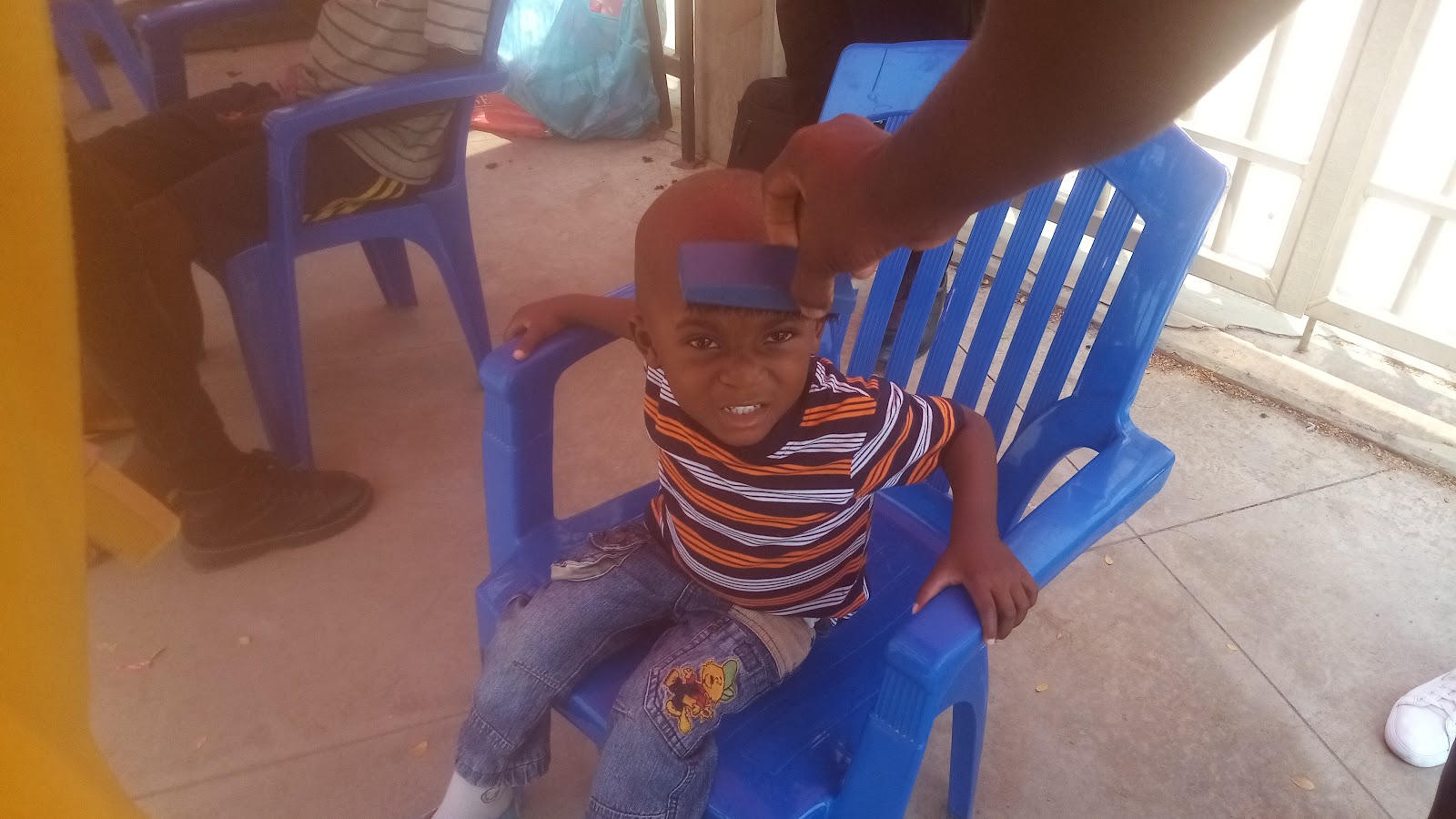
3. Haircut

5. Evangelism

6. Psychological assistance


There is no doubt that our Soup kitchens can help alleviate some of the burden that people who are trying to provide for their families are facing.


Sofonie Dala is looking forward to bringing together diverse ideas and perspectives from international and national stakeholders, like:

Next-generation innovators and systems thinkers, entrepreneurs, farmers, scientists, public and private sector representatives, civil society representatives, activists, financial sector representatives, chefs, as well as individuals outside of the food and agriculture industry.


People and local authorities were very satisfied with our work and were very grateful. Even some people passing by. got out of the taxis to come to eat, drivers abandoned their cars to have a meal.


It was possible to perceive that in Angola there are still many people facing serious problems with hunger.


Queue to cut hair


Haircut


We see people as part of an ecosystem. In this ecosystem, health is not isolated but interacts with nature, the environment and concepts such as sustainability. We believe in a value-based society in which all social domains work together in an integrated way.

Friday, 1 April 2022

WOW! We are delighted to announce the second part of #SHECODESAFRICA - ''BabyScream'' IBM RPA Anti-harassment chatbot to End Child Marriage. The tech show with Sofonie Dala

 ROBOTIC PROCESS AUTOMATION (RPA)

SHE CODES AFRICA - BABYSCREAM

THE TECH SHOW WITH SOFONIE DALA, ANGOLA


Children are increasingly undergoing abuse, yes. Violence has increased within our communities. Cases of child marriage have increased; issues of children being murdered have also been heard of in many areas.

What is the solution?

IBM  RPA Web Automation and Anti-Harassment Chatbot to Prevent Child Marriage and Abuse

This solution weaves together RPA, AI among other technologies to create a solution that vastly prevents child marriage and abuse, domestic violence and teen pregnancy in Africa. The bot connects users with agent-defenders, allows victims to report harmful practices and denounce their aggressors.


Good evening ladies and gentlemen! 

We welcome everyone to our cloud environment! In this platform, we are enhancing our functionality and IT capacity.

Violence against children takes many forms, including physical, sexual, and emotional abuse, and may involve neglect or deprivation. Violence occurs in many settings, including the home, school, community and over the Internet.

Sometimes raising awareness about sexual violence happens through very practical means.

IBM RPA Chatbot-BabyScream

We designed an Anti-harassment chatbot named BabyScream to help victims of child marriage, domestic violence and sexual abuse, denounce harmful practices.


Using IBM tools to solve world´s most pressing challenges.


How does it work?

There is both an Art and a Science to Automation. The Art comes through in the creativity and imagination of the design team and the Science is evident in the steps taken to build, test and deploy interconnected software components.

Hands-on lab 

IBM  RPA Web Automation and Anti-Harassment Chatbot to Prevent Child Marriage and Abuse

We used RPA Automation Studio to create and deploy an Anti-Harassment Chatbot to Prevent Child Marriage and Abuse and automate our Web.


Basically, this anti-harassment chatbot provides the victims with any kind of assistance they require. It also matches the victims with the right specialist capable to support them. 

Running the Robot successfully


The bot asks them to provide their personal details such as name, age, sex, residence address and contacts. This information facilitates the connection between victims and experts from organizations and centers responsible for solving such cases.

Maria's story

As you can see in the data that the victim introduced, today we are showcasing the story of 14-year-old Maria, who is being given in marriage by her parents due to extreme poverty.


The robot also displays a list containing address, phone contact and emails of organizations that handle these cases, including police station, UNESCO, UNICEF, support center etc.


At the end of the conversation, the bot advises the victim to visit our digital platform to read good content.

Web Automation

We automated our own browser and named it babyscream - The bot opens our medium digital platform enabling the victim to navigate a relaxing meditation, telling stories of other victims and showing good practices.

NICE! THIS COMPLETES THIS HANDS-ON LAB.


Anti-harassment Chatbot-BabyScream — To End Child Marriage

Education is an essential factor in combating the worst forms of child labour, including child marriage, domestic violence, teen pregnancy, human trafficking, poverty, social exclusion and gender bias.

The main goals of the project are to strengthen prevention mechanisms against child marriage and teen pregnancy, improve the mental health and education process and support survivors safely.

IMPACTS OF THE COVID-19 PANDEMIC ON CHILDREN AND YOUNG PEOPLE IN SOUTHERN AFRICA

The pandemic has affected their lives including: (1) food insecurity and hunger, (2) difficulty following preventative measures, (3) navigating a new normal at home, (4) an increased risk of witnessing or experiencing violence, (5) child labour, (6) early marriage, and (7) online risks.

It is real the ridiculous situation that Africa has been suffering for decades with the high rates of mortality and birth, in which among the great causes we have child marriage justified in beliefs, taboos, culture and religion.

Sex education is still a very sensitive issue for the African community, which from an early age imposes marriage as the biggest dream and life goal for girls and a demonstration of virility in the case of men.

5 WAYS TO END CHILD MARRIAGE

It’s every girl’s right to choose if, who and when they marry. Yet globally, nearly 41,000 girls are forced into child marriage every day. Child marriage robs girls of their childhood, often forcing them to drop out of school, exposing them to violence – sexual, physical and emotional – and thrusting them into experiences that their young minds and bodies are not ready for, like motherhood.

1. EDUCATING GIRLS

2. EMPOWERING GIRLS

3. PROVIDING GIRLS AND THEIR FAMILIES WITH INCOME OPPORTUNITIES

4. PETITIONING GOVERNMENT AND ENCOURAGING SUPPORTIVE LAWS

5. RALLYING THE WIDER COMMUNITY TO STAND UP FOR GIRLS’ RIGHTS

Parents and community leaders are often responsible for deciding when and whom a girl marries. In many traditional communities, it’s believed that marriage keeps girls safe, protected and economically provided for by their husbands.

When parents and community leaders are educated about the many negative consequences of child marriage, it can inspire them to change their views, speak up for girls’ rights and encourage others to do the same.


Africa Educates Her Campaign with Sofonie Dala

In this chapter we will be telling stories of some women and girls who dropped out of school due to child marriage and teen pregnancy.

Both early teen marriage and dropping out of school have historically been associated with a variety of negative outcomes, including higher poverty rates throughout life.

Our today's guest  is Luisa, she will share with us her academic history and consequences of her choices.

Luisa's story

I regret breaking my studies because of a young marriage

Hello! My name is Luisa, I will talk a little about my academic life and how I stopped studying.

I stopped studying when I was twenty years old because I found a husband. This marriage made me forget school, I gave birth to four children. But I regret that I stopped studying. Now I have no way to go back to study because life no longer allows me to study. I don't have a job, my husband is also unemployed, and we're all stuck.

If someone offers me a help, I would like to go back to study because I have this desire so that my daughters can also study, in order to improve our life a little bit.

What grade did you stop studying in? How old are you now?

I stopped studying in the 8th grade. Now I am 34 years old.

Have your daughters ever gone to school?

Yeah, they did. My first daughter is 14 years old, finished the 8 grade and has been two years without studying.

The second daughter is 13 years old, she concluded the 4th grade and is also two years without studying.

Click here on these links to find out how her story ended. https://sofoniedala.blogspot.com/2020/12/africa-educates-her-campaign-angola_23.html

https://sofoniedala.blogspot.com/2021/01/wow-we-are-celebrating-successful.html


Osana's story

Today we invited Osana, she will share with us a little of her academic life.

It has been difficult to pay for my studies and at the same time support my baby

Hello, good afternoon! My name is Osana Manuel, I'm 22 years old and I'm going to share my academic life with you.

Unfortunately, I became pregnant at the age of 18. I gave birth to my son, finished high school and even managed to enter the first year of university. But I was forced to lock the school year because of financial problems.

How long have you been without studying?

I stopped studying in 2019. I locked the year because it has been difficult to pay for my studies and at the same time support my baby.

Osana, aren't you married? I'm not married. Unfortunately my relationship with my son's father did not work so I am a single mother.

Would you like to go back to school if an opportunity came up?

I would really like to go back to school because study is one of my biggest focuses. I attend many short courses  but I really want to finish university.

How did covid-19 impact your life?

The covid-19 disease was practically a disgrace, I was working and suddenly I stopped because of the covid-19 pandemic. I am now unemployed. Till today I'm sitting at home.

Thank you!

Click this link to learn more about Osana https://sofoniedala.blogspot.com/search?q=osana

Maria's story

Pregnancy related school dropouts have become a matter of public concern in the world today. Schoolgirls who become pregnant have fewer opportunities to complete their education after childbirth and have fewer opportunities for socioeconomic advancement.

Our today's guest is Maria, she will share with us her academic journey.

I dropped out of school due to teenage pregnancy.

Hello, My name is Maria Gomes, I'm 21 years old, I'm here to talk about my academic life.

Maria are you studying right now?

No.

When did you stop studying and how old were you at the time?

I stopped studying in the 7th grade in 2017, at the age of 18.

Why did you stop studying?

I stopped studying because I got pregnant. When I discovered the pregnancy I did not stop studying at that moment, I continued with my studies until November 2017, then I dropped out of school because of the pregnancy symptoms.

Are you married to the father of your child?

No. We broke up because he denied the pregnancy

Would you like to go back to school?

Yeah, I'd like to go back to school.

What are the reasons that prevent you from going back to study?

Lack of financial resources. I have no money to pay my tuition.

How has the coronavirus affected you?

I used to work, but after the emergence of the pandemic my boss asked me to stay home. Also things in this period are very expensive and have made life very difficult, we had no way to eat at home, I am not working.

How have you been supporting your son?

My 35-year-old older sister has been helping me with the expenses. In general, I support my son alone without his father's help.

How old is your son?

My son is now 3 years old.


Girls and young women’s access, retention and completion in schools is still of huge concern in Africa. Our continent also has the highest rate of out of school children and adolescents globally. However, girls remain more likely to be permanently excluded from education and at a higher risk of being left behind.

Click this link to learn more about Mariahttps://sofoniedala.blogspot.com/2020/12/africa-educates-her-campaign-angola_24.html


Recommendations

We recommend that the relevant actors work together to provide practical help in the areas of education, health and hygiene, food provision, family livelihoods and COVID-19 awareness raising.

 Furthermore, we recommend the establishment and maintenance of comprehensive child protection mechanisms and clear avenues to seek support. Moreover, we all relevant stakeholders and decision makers to listen to children and young people and take their views seriously. 

From the time quarantine started, there has been domestic conflicts between parents involving children, where they are physically abused by their own parents or guardians. Physical abuse cases towards children have really risen in our neighbourhood.

Some peers are being beaten more than usual now that they are stuck at home with their parents [who are] taking out their anger on them for their job losses or other frustrating factors. Strict parents are taking out their stresses on their children.

SEXUAL ABUSE AT HOME

Children continue to get sexually abused by people they live with. It may happen that, in some cases, there is even sexual abuse because [children and young people] are now spending a lot of time as well at home with many other relatives that have come back due to the coronavirus.

Sexual abuse is, however, happening now. It is a concern because even children as young as from 1 to 3-years-old are sexually abused by uncles and cousins ​​who live close to them. Unfortunately, these children do not survive the pain of rape and end up dying.

 What is robotic process automation?

Robotic process automation (RPA) is a software technology that makes it easy to build, deploy, and manage software robots that emulate humans actions interacting with digital systems and software. Just like people, software robots can do things like understand what’s on a screen, complete the right keystrokes, navigate systems, identify and extract data, and perform a wide range of defined actions.


A big, big thank you so much for all your support and loyalty over the years. We hope to see you soon!